



This is a guide to give you some basic information about roof tiling and to try and help demystify the jargon around roofing in general.
The main materials used to make tiles in the southwest of France is either clay or slate, which come in a number of colours and styles.


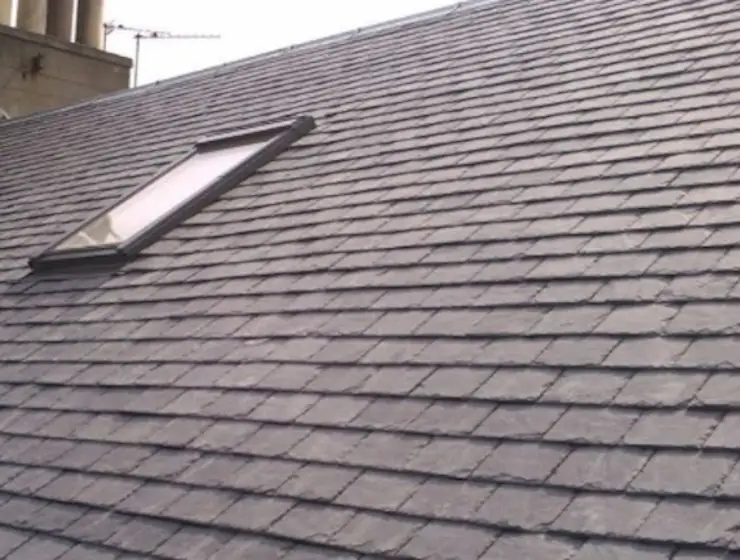
Within the type of tile material (above) there are three main types of tile: Flat, Canal and Mechanical with different tiles requiring a different pitch (slope) of the roof to work correctly.
Flat Tiles

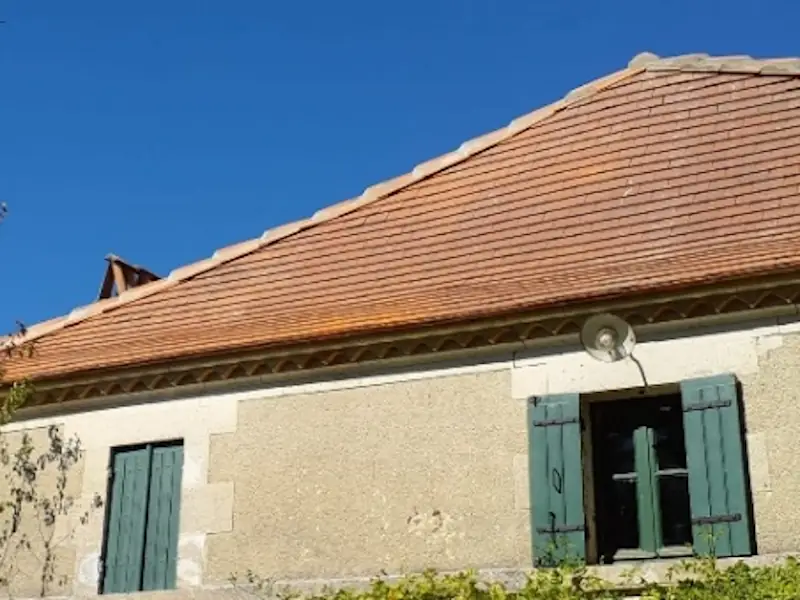
Canal Tiles
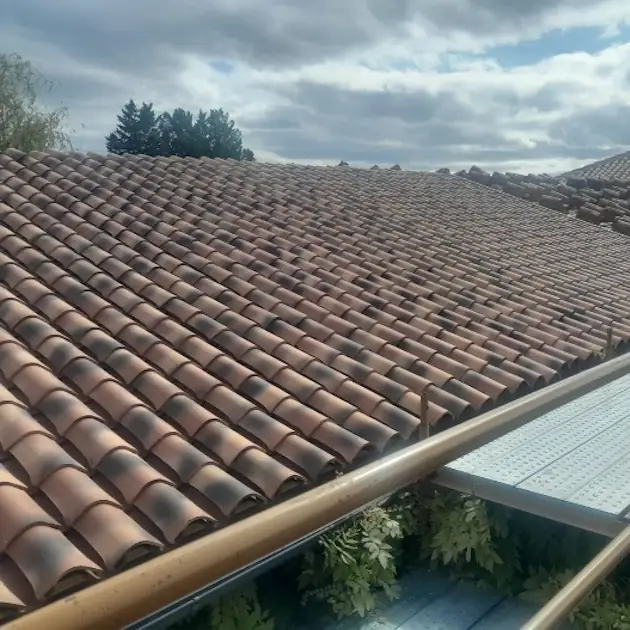
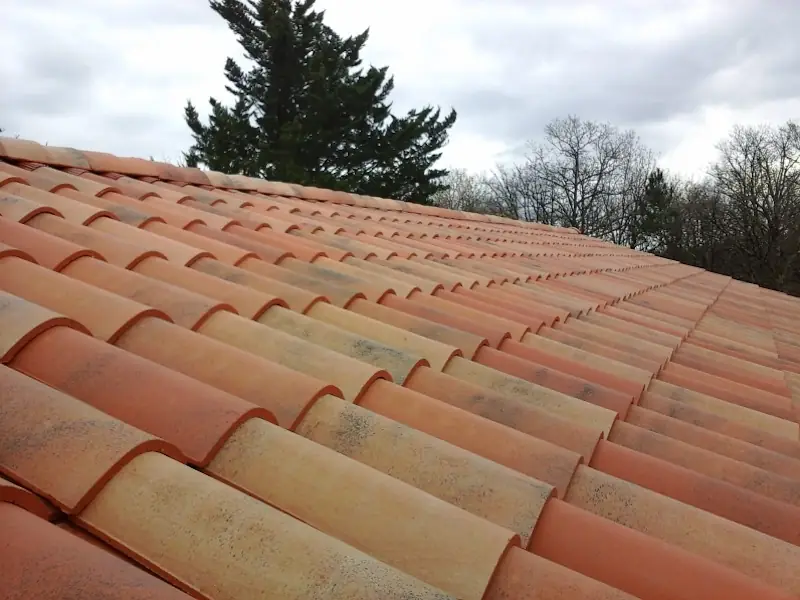
A traditional style tile. Many properties have these tiles which are not mechanically fixed and there is ongoing maintenance required to reposition slipped tiles.
If the roof pitch requires intervention to prevent slipping, this can be done by the installation of hooks (crochets) to fix the tiles in place.
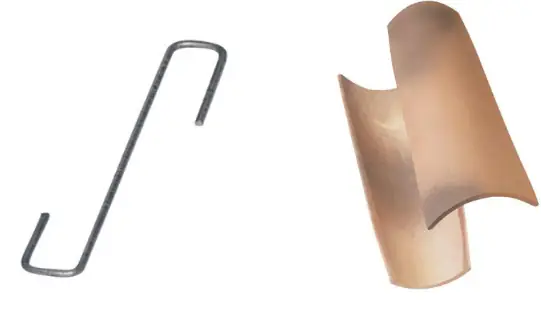

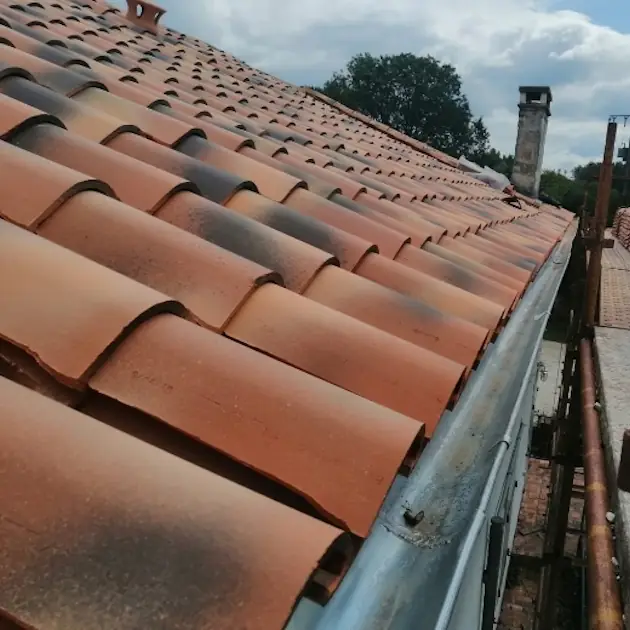
Canal Interlocking
Whereby the bottoms interlock and are fixed to the battens and the tops interlock and can also be fixed to the battens.
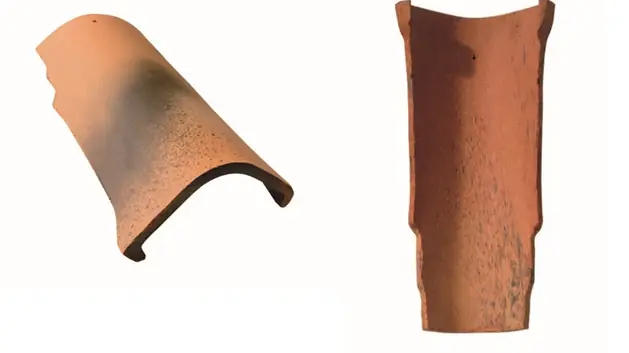
These give a very traditional look but do not have the slipping issues of the traditional tiles.

Mechanical Tiles
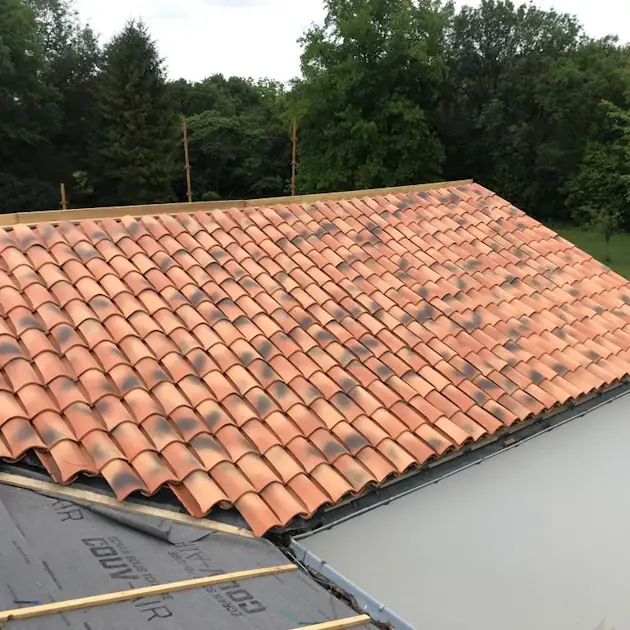
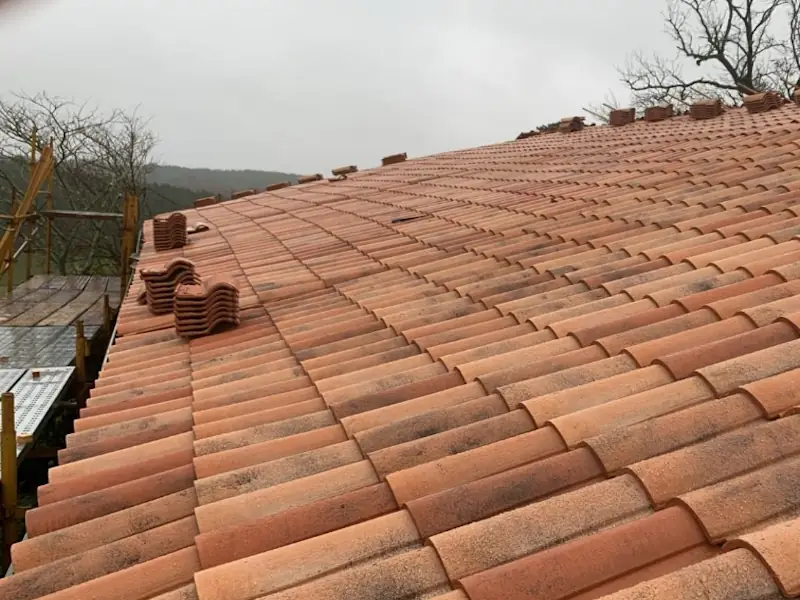
These are essentially distinguished from other tiles because of the high level of water tightness due to the interlocking system, allowing them to be installed more securely than traditional tiles.
They are called “mechanical tiles” because they were the first tiles to be manufactured industrially, by moulding, using an industrial process.
This was patented in 1841 by Xavier Gilardoni.
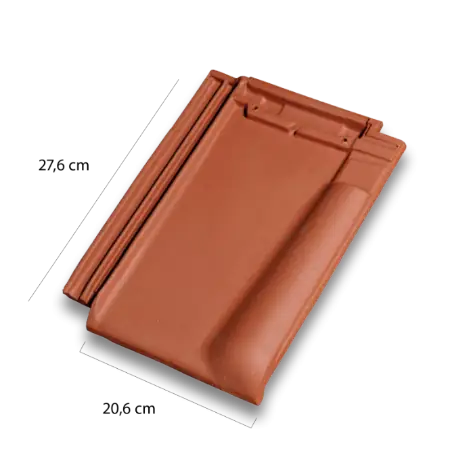
There are a number of different types of tile and many colours to choose from.
Mechanical tiles are described as small mould or large mould tiles.
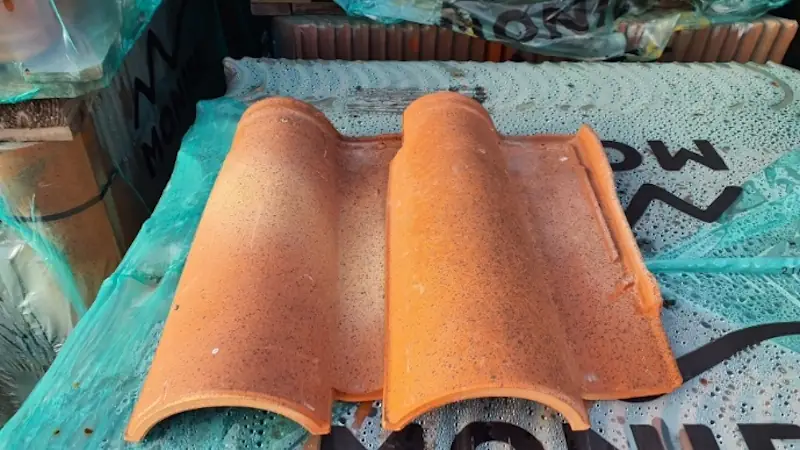
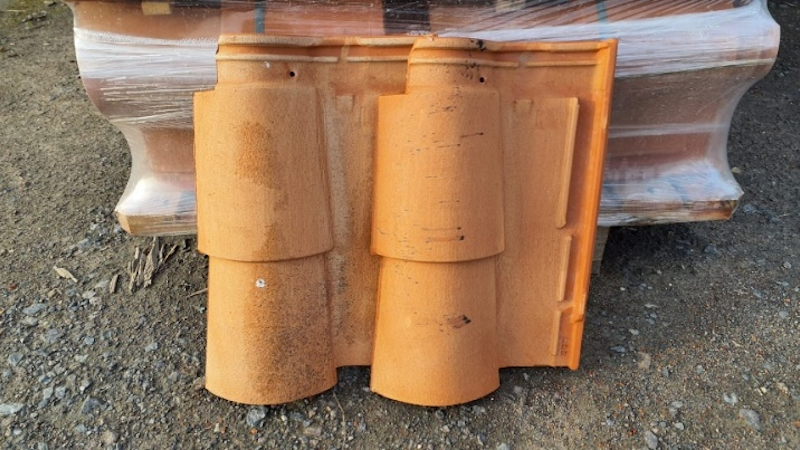
For an idea of costs for your roof visit our Roof pricing page or Contact us for more information.

Roof Pitch (pente)
For roofing purposes France has been divided into zones.
These zones tell the roofing professional what type of tile can be used on what pitch of roof.
These instructions are called DTUs (Document Technique Unifié) and they cover all aspects of the roofing industry.
Tile Options
Monier Interlocking
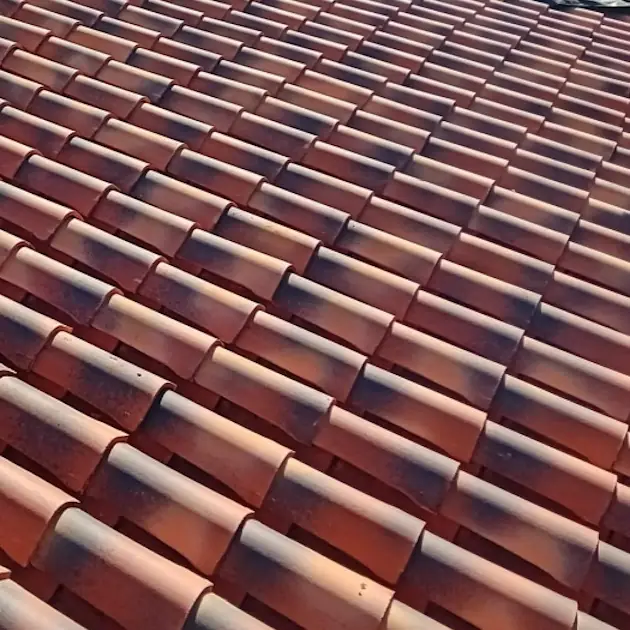
Mechanical Terreal
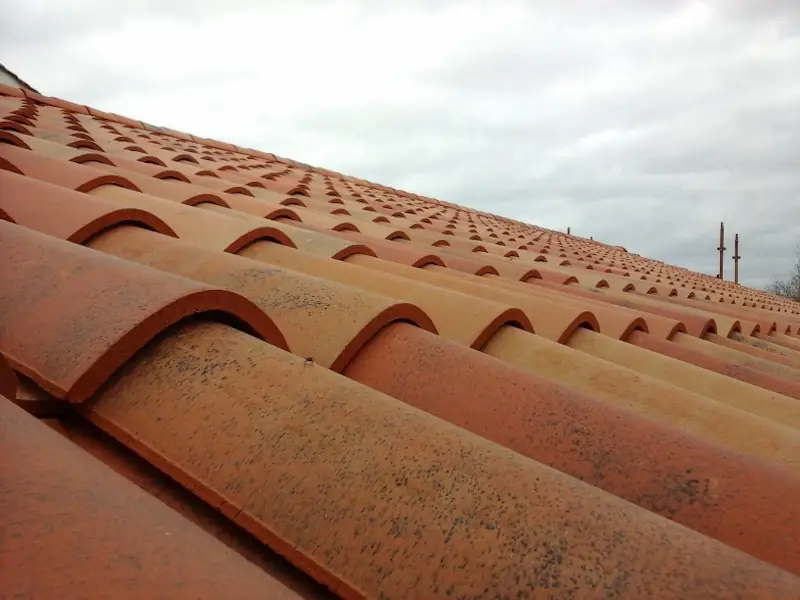
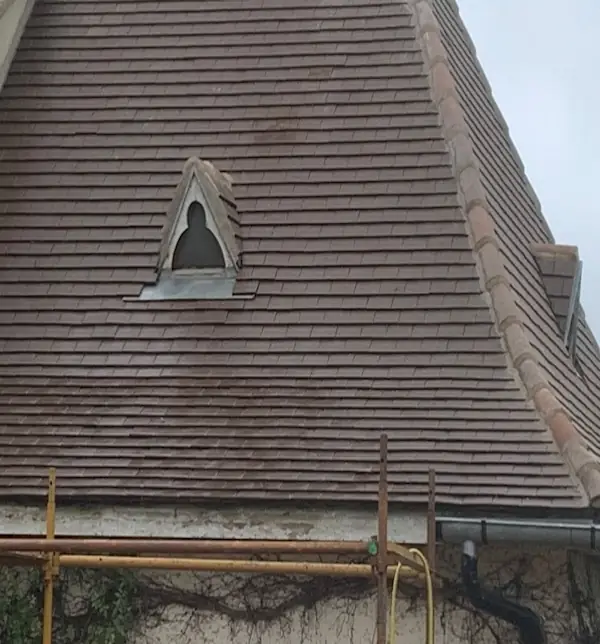
Flat tiles (Tuiles plats)
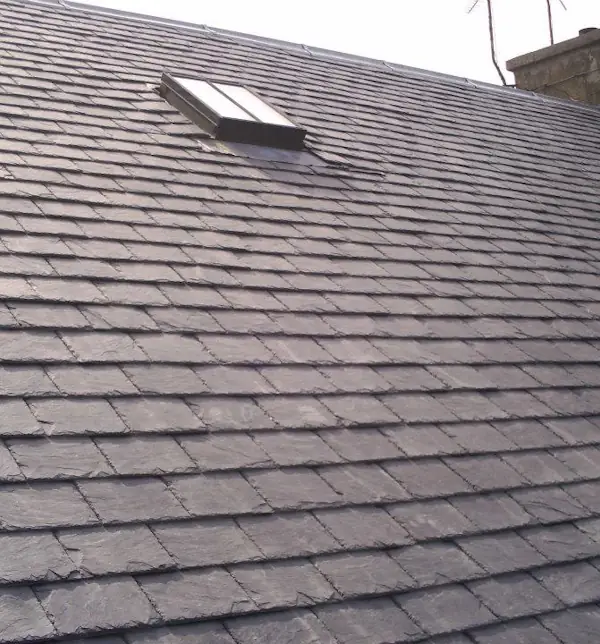
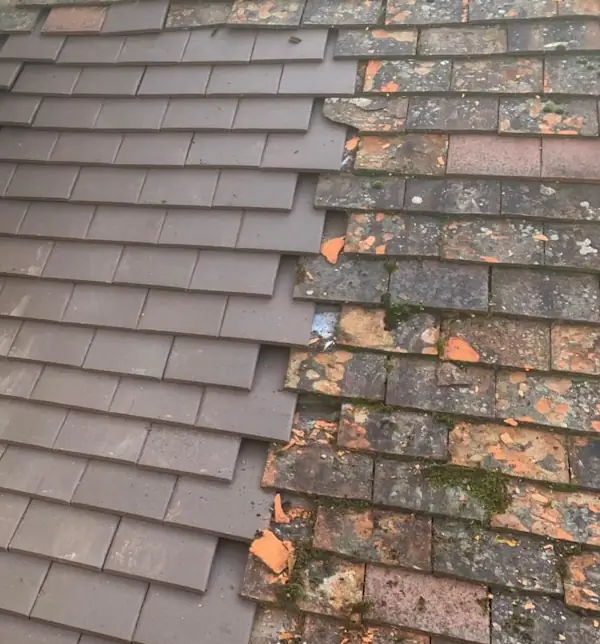
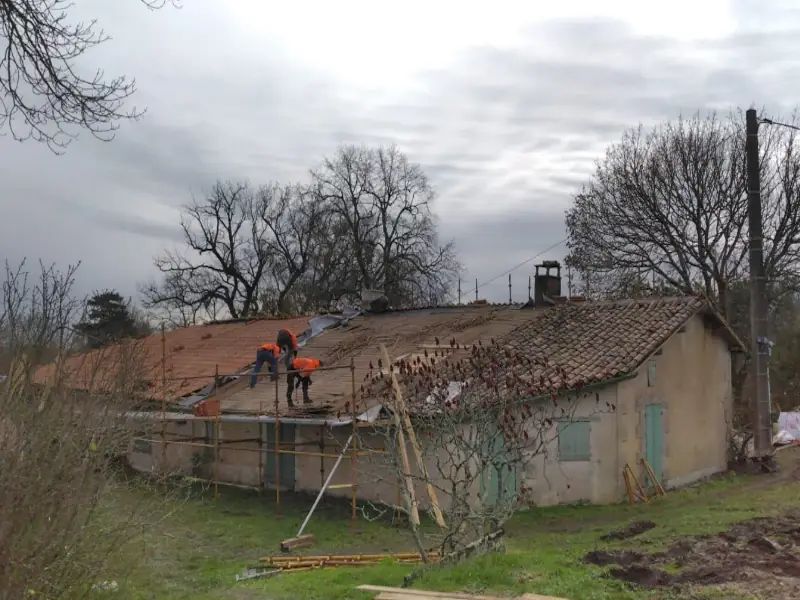
If you are looking for an alternative solution to a new roof then take a look at our Roof inspection and maintenance service.
Roofing Accessories
Alongside the tiles there are a number of other items that are used in the roofing process.
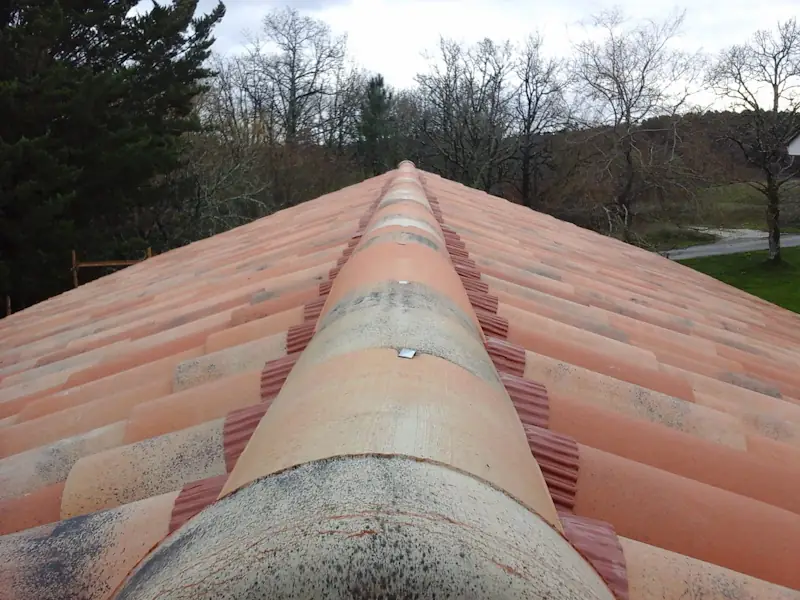
These include ridge tiles with an option of a wet or dry ridge.
Dry ridge
The modern method is a dry ridge, which involves closing the ridge with a roll made of a vapour permeable membrane down the centre, with a corrugated coated aluminium strip down each edge. This is mechanically fitted and helps to ventilate the roof. On top of this the ridge tiles are fitted with clips and screws.
Traditional wet ridge
The top of the roof is made from ridge tiles laid on a sand and chaux mortar. The DTUs prohibit a cement mortar.
The chaux and sand mortar is flexible and reduces the chance of cracking.
DTU 40.22. art. 2.4 (extract).
Since the use of ordinary cement mortar is not permitted, there are two categories of mortar: a bagged mix or bastard mortar. Both intended for fillets or flashing. Common cement mortar leads to excessive rigidity of the assemblies and risks of cracking.
The ridge laid on a bed of mortar seals the ridge line and therefore cannot ensure the regulatory ventilation. This type of ridge is imperatively accompanied by ventilation tiles laid on the roof.
The ridge tiles are tiles that are significantly larger than the single-pitched tiles
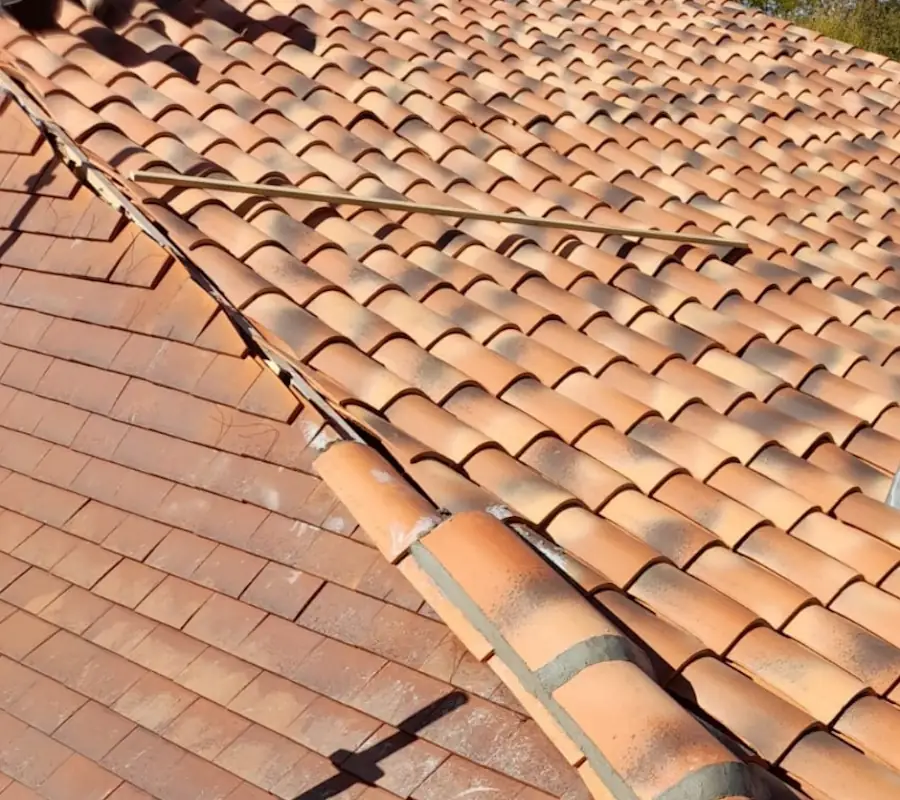
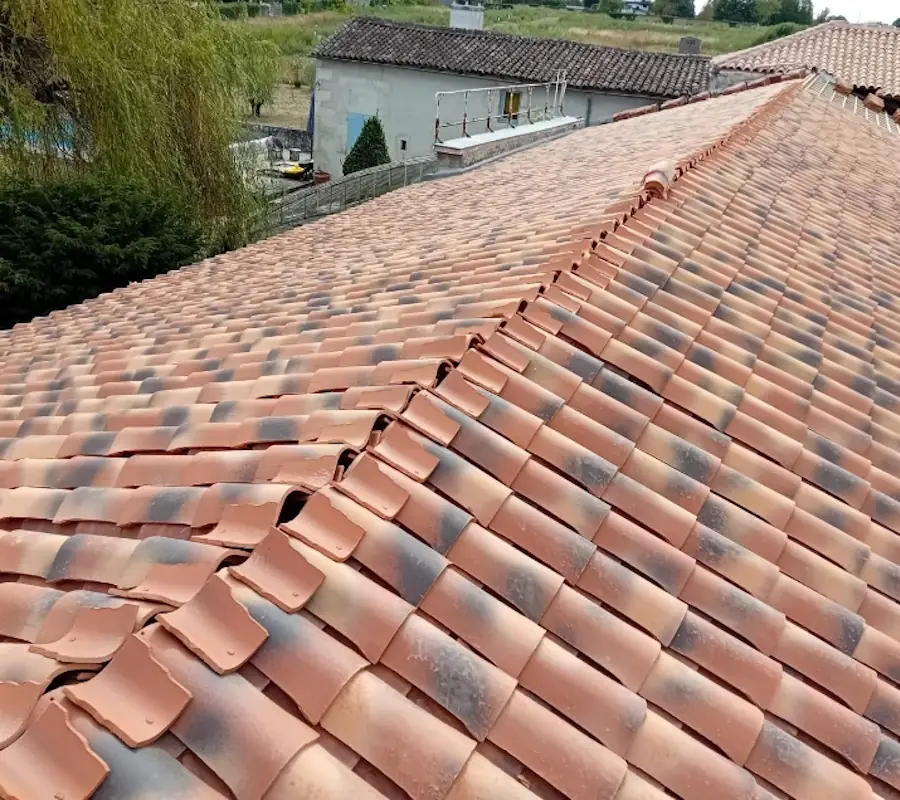
Tongues (languette) cut and in place before the mortar.
Some craftsmen use a tongue (languette) between the ridge tiles to facilitate the flow of water on the slopes. Others apply only simple mortar or mortar with added breaks (fragments of tiles).
Finally, the ridge ends must be sealed. A ridge stop end (fronton de rive) on each side elegantly closes the ridge line.
On steep roofs where flat tiles or slates are used, the ridge may be finished in zinc.
Finishing accessories
There are a number of additional finishing accessories to complete the roof.
Verge (RIVE) tiles
These are the tiles on the edge of the roof. They come in a number of different styles and are best matched to the type of tile being used.
Ventilation tiles
These tiles are used to ensure there is air flow between the membrane (ecran) and the tiles.
Roof vent tiles
Ventilation for your household appliances, such as cooker hoods, duct ventilation, septic tanks, and many others. In France these come with a chapeau/hat.
Decorative components
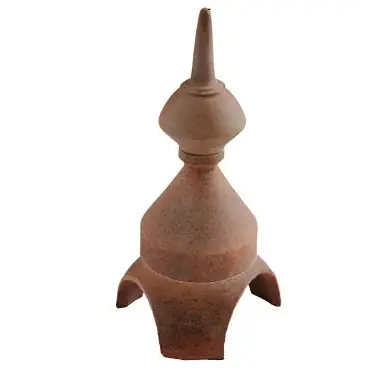
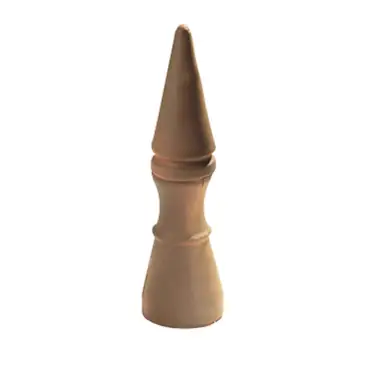
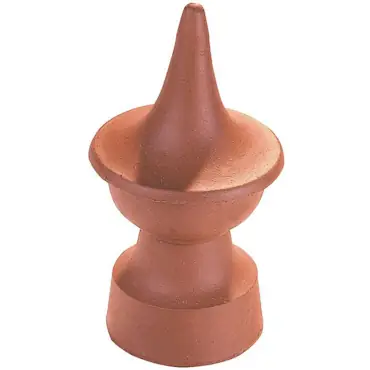
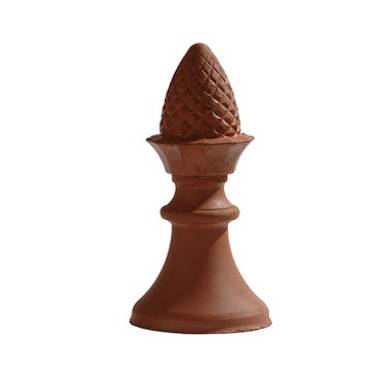
The spires that are on the end of the ridge are called finials. (poinçons)
Making the roof watertight
Zinc flashing
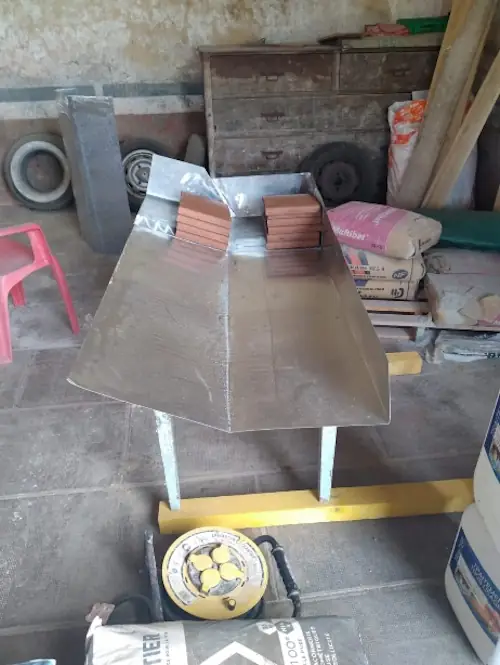
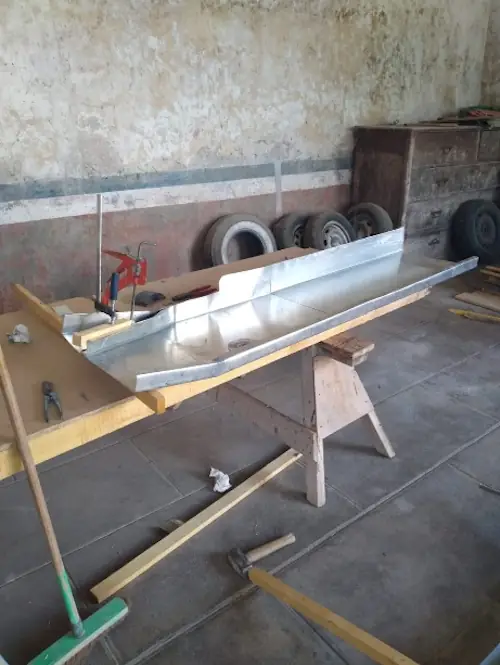
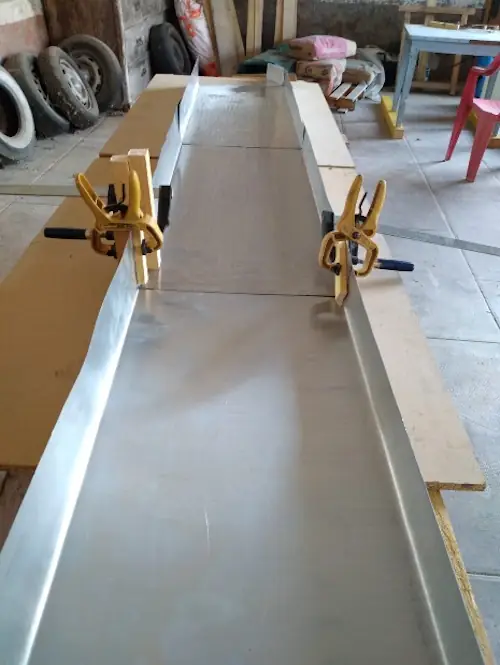
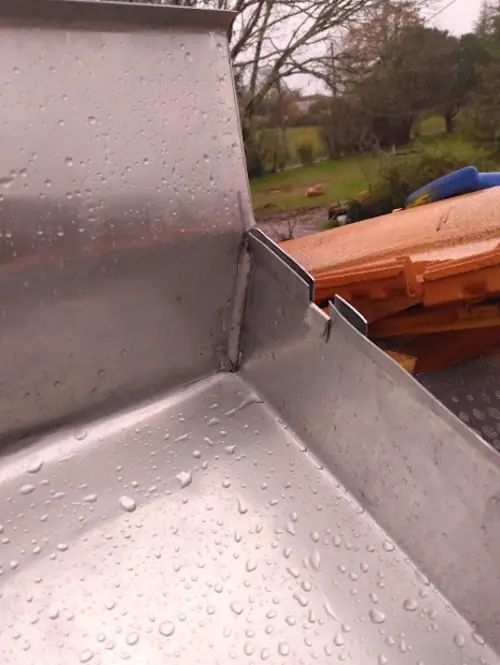
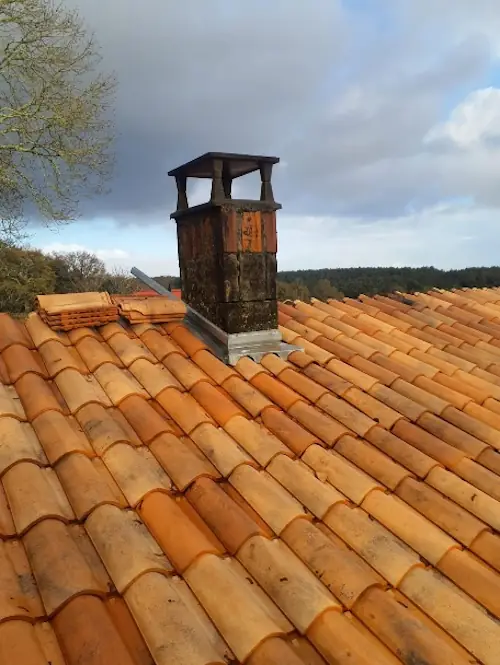
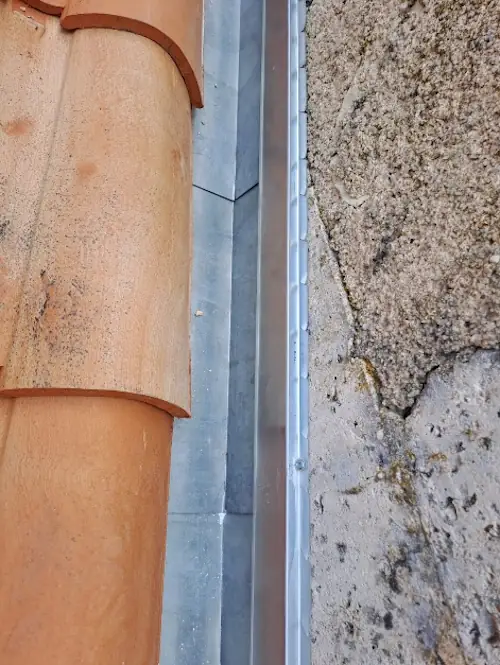
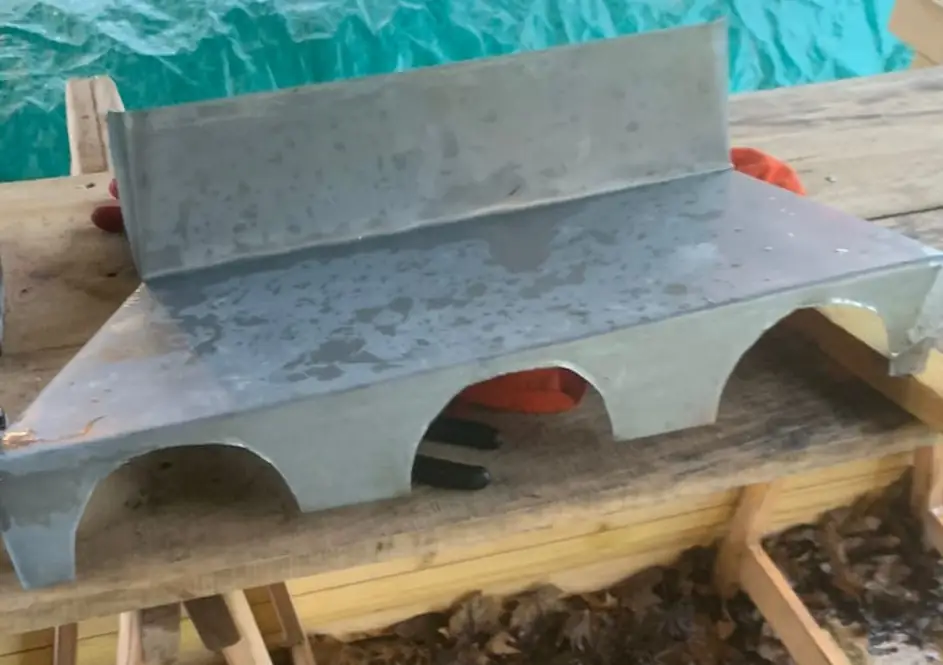
There are other areas of the roof that need special attention to ensure they are watertight. This includes the chimney and where a roof joins a wall. We close these joints with bespoke zinc components that are made up on site. All of our zinc work is soldered.
For help with your roofing project, please complete our Contact form.
Or for more information go to:
Roof pricing
Roof inspection and maintenance service.