
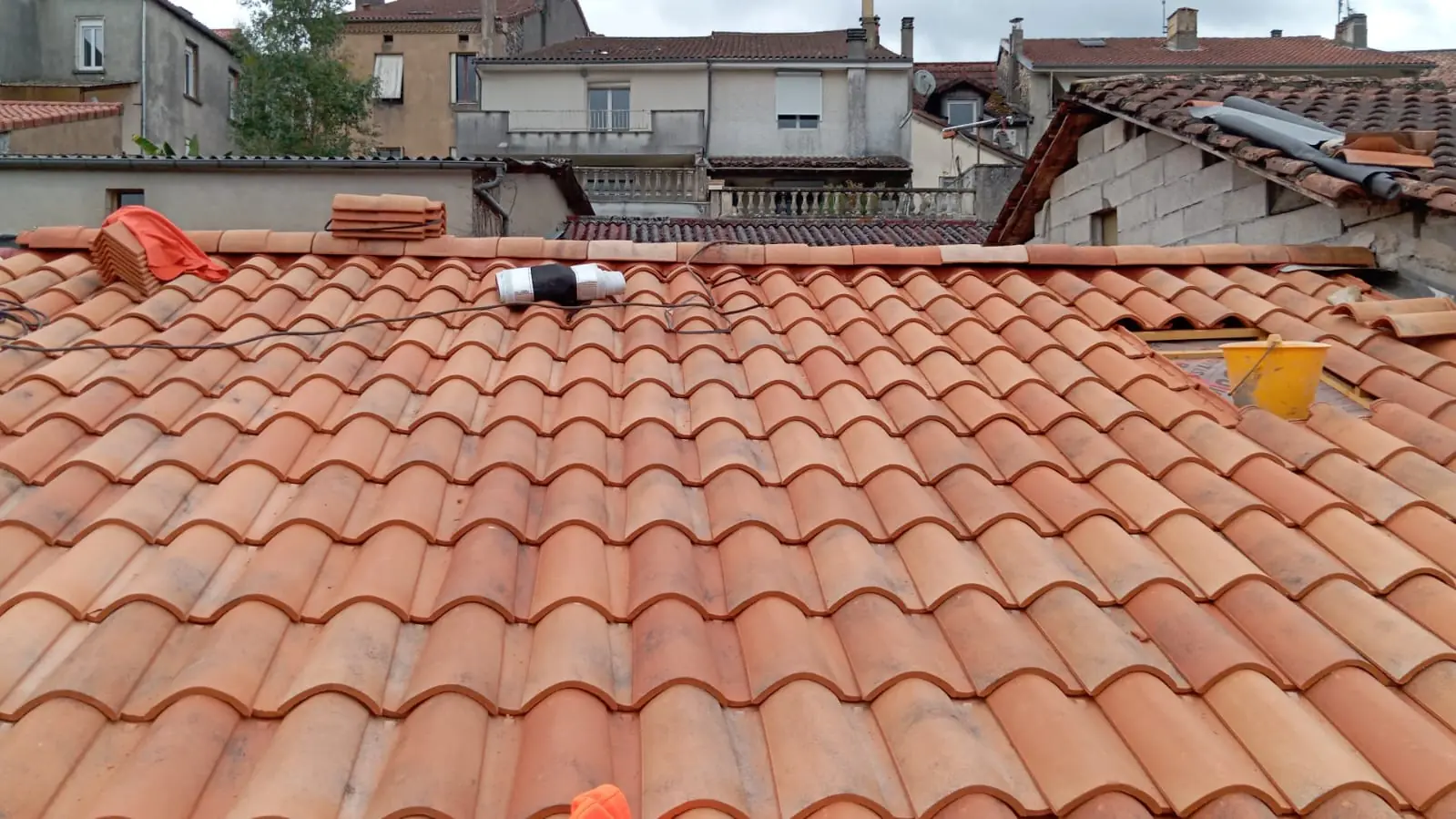
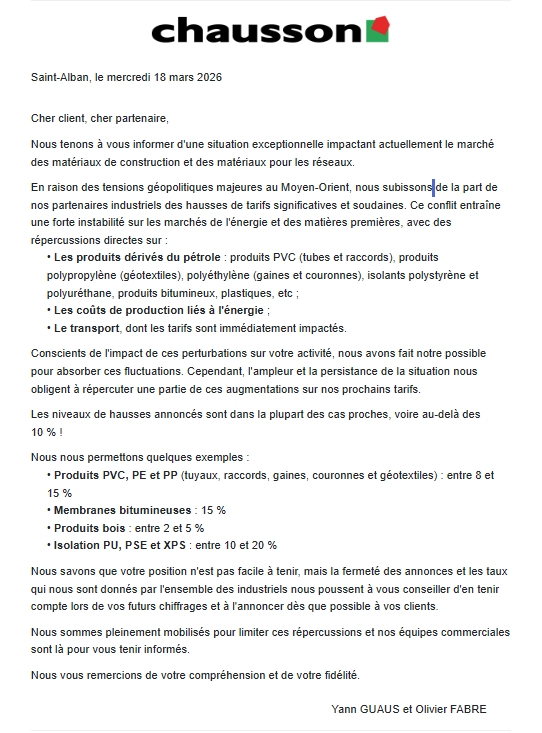
We want to keep you informed and up to date about what’s happening in the French building market right now. If you’ve been following the news, you’ll know that fuel and energy have taken a real hit since January, and unfortunately, that’s filtered down into the cost of keeping a roof over your head. Between the new CEE (Energy Savings) tax updates that kicked in on 1 January and the general volatility in the energy sector, we’re seeing a “double hit” that’s making things difficult for everyone—from the manufacturers right through to the crews on-site here in the Charente and Dordogne.
What we’re seeing for the next few months (H1 2026) The table is a direct reflection of the data we’re getting from our suppliers. Some of these prices are resetting every quarter, while others are moving almost weekly.
| Material | Expected Increase by June | How often it resets |
| Clay Tiles (Terre Cuite) | +8% to +12% | Quarterly: Major jumps on 1 Jan and 1 April. Next reviews expected 1 July and 1 Oct |
| Natural Slate (Ardoise) | +5% to +8% | Monthly: Usually tied to diesel and shipping spikes |
| Natural Zinc | +10% to +15% | Weekly: Very reactive to the global energy markets |
| Logistics & Fuel | +15% | Immediate: Applied to every delivery we receive |
How this affects your project and our quotes
To keep things running smoothly and ensure we aren’t quoting based on old data, we’ve had to make a couple of adjustments to our admin:
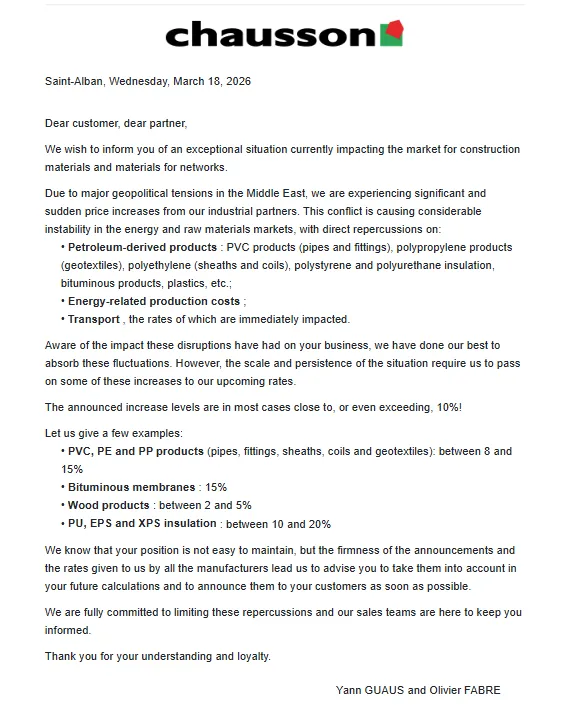
- Merchant Validity: The builder’s merchants like Chausson have cut their price guarantees down to 10 days.
- Our Quotes (Devis): We used to keep these valid for 30 days, but we’ve had to pull that back to 14 days. After a fortnight, we’ll need to issue a fresh quote to reflect whatever the market has done in the meantime. When things settle down, we will review this again and hope to get back to 30 days.
- Fixing your price: If your project isn’t starting immediately, you can lock in today’s rates by paying a 50% deposit. This lets us pre-order and store your materials so you aren’t hit by the 1 April quarterly reset and the predicted volatility for the rest of 2026. Industry forecasts suggest that energy-intensive production—especially for clay and metal—will face further “step-ups” in July and October as manufacturers adjust to the new carbon-pricing landscape and the ongoing instability in the Middle East, which continues to drive up shipping insurance and raw material costs.
I’d like to say a massive well done to our customers who have already taken this option. It’s saved a fair bit of stress (and money) given how things have moved lately.
Why this matters
In my experience, when a contractor starts talking about “price indices” or “surcharges,” people can feel like they’re being squeezed. But the reality is that we’re trying to avoid being caught out.
These safeguards are in place to ensure the continuity and viability of your project. With the current volatility in the cost of materials like zinc and slate, these measures protect the build from sudden supplier price increases once we have commenced. Our focus is not on increasing margins, but on guaranteeing that the agreed budget remains robust so we can deliver your roof to the highest standard without any financial compromise. Using these official indices (like BT30* for slate, BT32* for tiles, and BT34* for zinc) is just a fair way to make sure the project remains viable for everyone involved. Importantly, this process does not impact those who have already chosen to fix their costs by paying the 50% deposit, as your materials are already secured at the original rate.
Material Availability: What to watch for
Most things are available right now, but we’re keeping a very close eye on the supply chain.
- Zinc and Lead: A lot of this comes from Asia and the Middle East. If things tighten there, the market here reacts instantly.
- Clay Tiles: The kilns use a huge amount of gas. If production costs get too high, manufacturers just limit their output.
- Steel: With Middle Eastern production hampered, everyone in Europe is fighting for the same local stock, which can wipe out “off-the-shelf” inventory overnight.
If you’re worried about how this might affect an upcoming project or a quote you’re looking at, please contact us and arrange a call with Graham. We’d rather have a chat and figure out the best way to protect your budget than have you get caught out later in the year.
Reference: Industry Data & Market Reports
According to latest industry data and market reports from sources like Eurofer and Kallanish Steel, the escalation of conflict in the Middle East has directly impacted the steel supply chain in several ways:
- Shipping Disruptions: Major carriers (including Maersk and MSC) have suspended transits through the Strait of Hormuz. This is forcing shipments from Asia and the Middle East to be rerouted around the Cape of Good Hope, adding 10–14 days to delivery times.
- Import Vulnerability: Europe has become increasingly reliant on steel imports from the Gulf Cooperation Council (GCC) countries (like Saudi Arabia and the UAE) because they werepreviously exempt from certain EU safeguard measures. The current instability puts these “safeguard-free” volumes at high risk.
- Inventory Pressure: Because import lead times are extending by weeks, European buyers are indeed pivoting to local mills to fill the gap. This increased competition for domestic stock is depleting “off-the-shelf” inventory.
- Cost Surcharges: We are already seeing “emergency freight increases” and higher insurance premiums being passed down to the end user.
In the French construction industry, BT indices (Bâtiment) are official monthly benchmarks published by INSEE (the National Institute of Statistics). They track the actual evolution of costs—materials, labour, and energy—for specific trades.
* Think of them as a “cost-of-living” index, but specifically for your roof.
What they track for your project:
- BT30 (Slate): The specific cost of quarrying, transporting, and preparing natural slate.
- BT32 (Tiles): The manufacturing and energy costs associated with clay and concrete tiling.
- BT34 (Zinc): The global market price of non-ferrous metals and specialist smithing.
Why we use them:
Instead of me guessing what a supplier might charge in six months and overpricing your quote to be safe, these indices allow us to use current market rates. If the price of zinc or slate spikes mid-project, the contract adjusts by the official percentage.
It’s a transparent, professional safeguard that ensures the continuity of your build without risking the project’s financial viability.
EDIT 19/03/2026
EDIT 19/03/2026